Air Force Museum
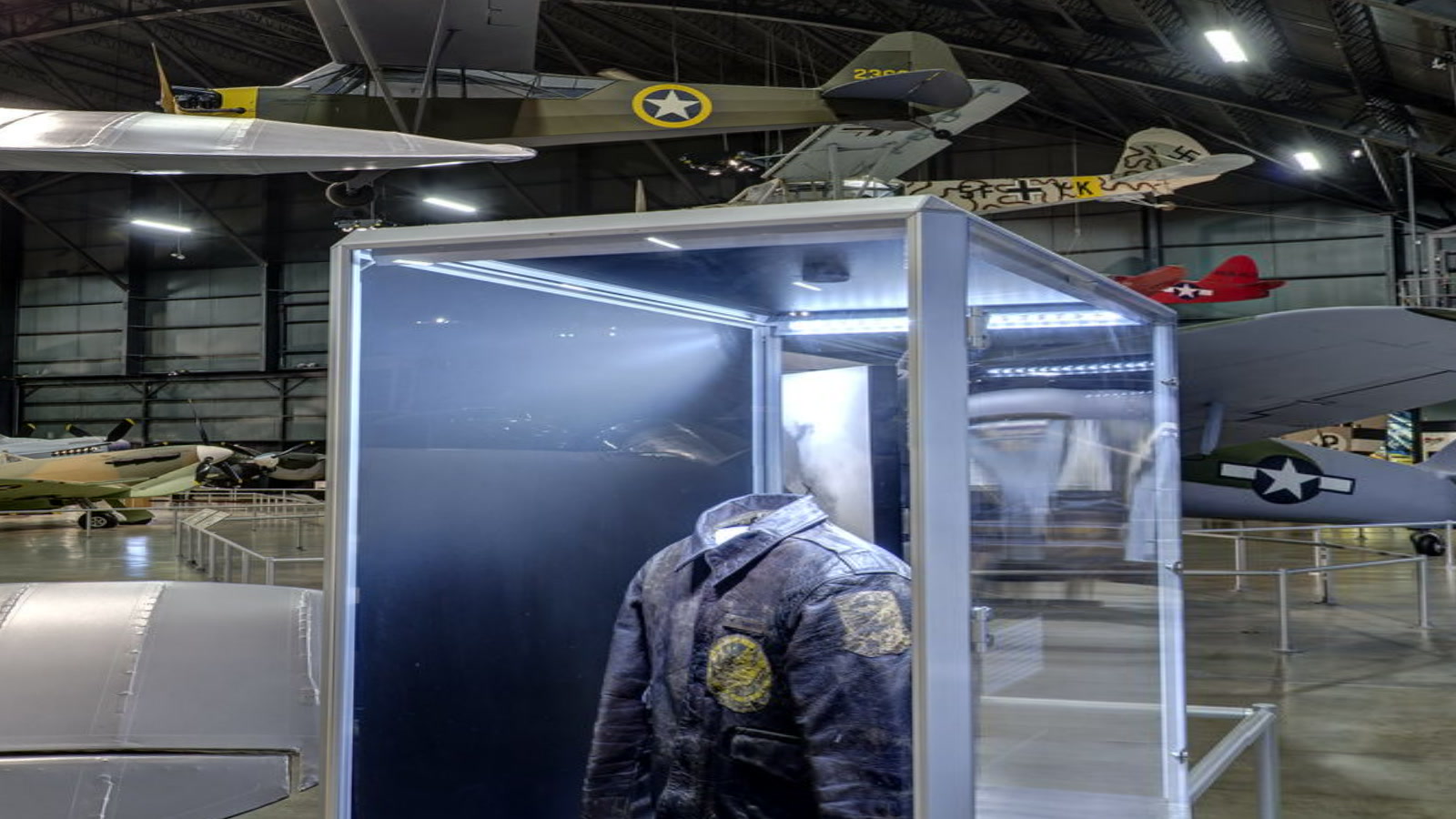
Edward C. Gleed Flying Jacket
Edward C. Gleed's flying jacket represents the pilots, ground crews, and support personnel of the 332nd Fighter Group. Edward Gleed served as operations officer for the 332nd Fighter Group, the combat organization most closely associated with the Tuskegee Airmen. A flying jacket carried practical value in an unheated cockpit, but names, insignia, and wear also turned it into a personal record of service.
In depth
The story behind the display
Gleed's career connects individual experience with the larger struggle against segregation. Black airmen flew combat missions abroad while confronting restricted opportunity, discriminatory policy, and unequal treatment within the armed forces they served.
History & service
This World War II flying jacket belonged to Tuskegee Airman Col. (Ret.) Edward C. Gleed. Enlisting in the 9th Calvary in 1941, Gleed was assigned to military intelligence. In 1942 he entered aviation cadet training at Tuskegee, Ala., and graduated in December as a second lieutenant. During WWII, Gleed became the 332nd Fighter Group's operations officer. He is officially credited with two kills.
The artwork on the back of the jacket represents the red-tailed, red-nosed P-51 Mustang aircraft flown by the 332nd Fighter Group.
Details that tell the story
Gleed served with the 332nd Fighter Group · The group fought in the Mediterranean theater · Flying clothing protected crews in cold, high-altitude conditions · Personal equipment can preserve unit identity and individual service
The second front was the factory and the flight line
Air power required far more than aircraft leaving a factory. Engines, radios, weapons, fuel, spare parts, tools, trained personnel, and suitable airfields had to arrive together. A machine grounded by a missing component could contribute little, however impressive its specifications. Maintenance and supply determined how much of a force was actually available on a given day.
The Second World War made this relationship visible on an extraordinary scale. Production expanded while aircraft designs continued to change. Training organizations had to turn large numbers of recruits into competent aircrew and specialists. Units then operated in climates and conditions very different from those in which the machines had been designed. Improvisation on the flight line worked alongside formal technical orders and a vast replacement system.
The smaller artifacts deserve attention within that story. A tractor moved aircraft and loads around an airfield. A jacket or oxygen mask helped a crew member function in an exposed environment. A trainer allowed procedures to be practiced without consuming a combat aircraft's life. These objects connect the spectacular mission to repeated daily work. Their history broadens the meaning of service: victory depended on people who built, supplied, repaired, taught, recorded, and cared for others, as well as those whose actions became famous in combat.