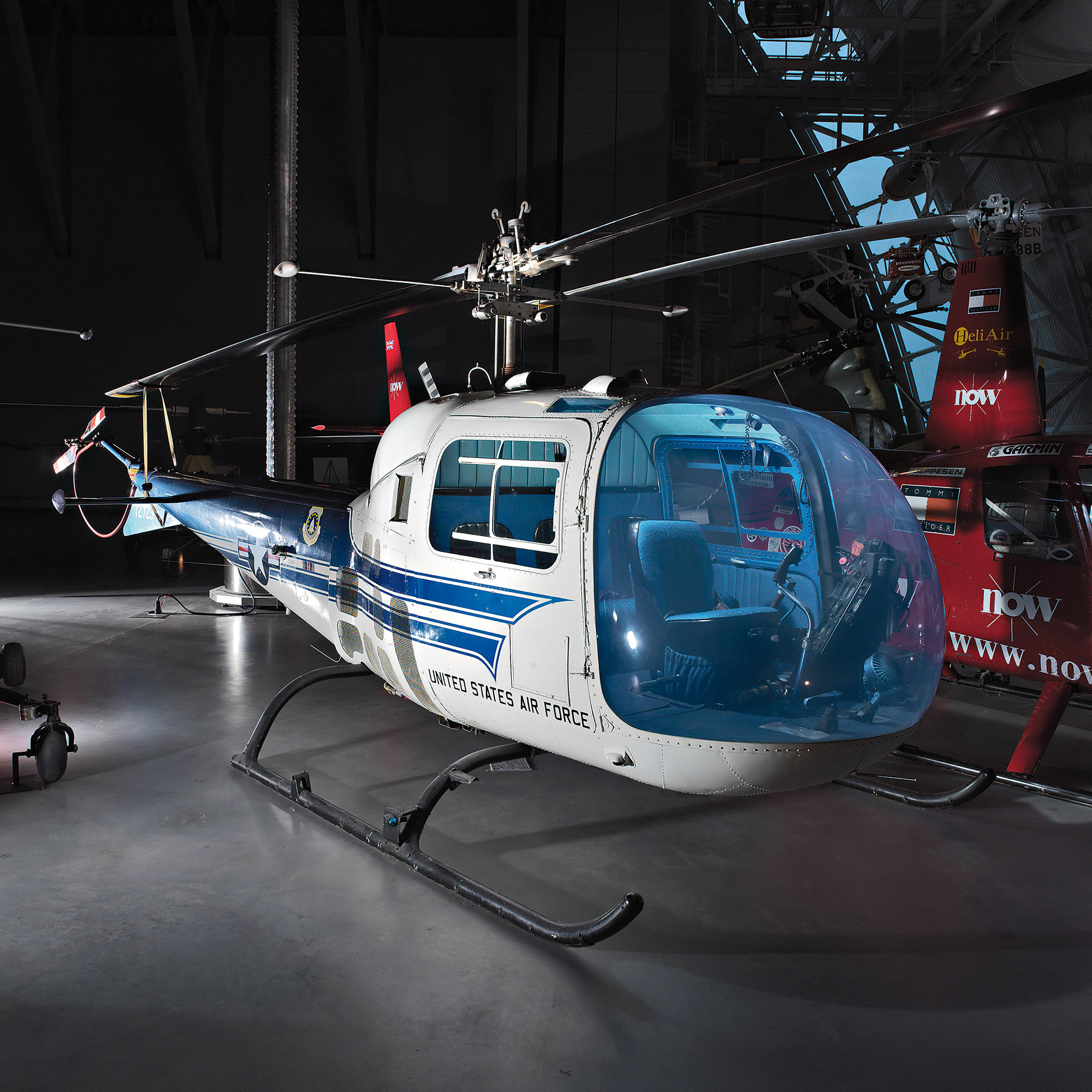
Air Force Museum
Kellet K-2/K-3 Autogiro
The Kellett autogiro used an unpowered rotor for lift and a conventional propeller for thrust. It represents an alternative design path between fixed-wing aircraft and helicopters. The autogiro was not simply an unsuccessful helicopter precursor. It solved particular operational problems and contributed knowledge about rotor behavior, control, and low-speed flight.
In depth
Details that tell the story
Rotor turned through aerodynamic autorotation rather than engine power · A conventional propeller supplied forward thrust · Kellett manufactured twelve K-2 autogiros beginning in 1931 · Autogiros explored short-field flight before helicopters matured
When a runway is the wrong answer
A helicopter exchanges some of an airplane's speed and efficiency for the ability to hover and land in confined places. Its rotating blades must provide lift and control while moving through changing airflow. The advancing and retreating sides of the rotor experience different conditions, and the pilot manages several controls together. Hovering is an active, demanding state rather than a pause in flight.
That capability changed the possibilities for rescue, medical evacuation, observation, and transport. A casualty no longer always had to reach a conventional airfield before being flown to care. Crews could approach places where roads were slow, damaged, or absent. Yet power, weather, visibility, terrain, and rotor clearance sharply limited what was possible. A successful rescue required judgment as well as a suitable machine.
Early helicopters in these collections show how manufacturers gradually made the idea practical. Their exposed structures and compact cabins make weight and payload compromises easy to see. Later machines carried more people and equipment, but the underlying tradeoff remained: the ability to operate close to the ground could place the crew close to danger. Following the connection from a small civil helicopter to a military rescue aircraft reveals a shared history of handling skill, mechanical development, and people using flight to reach someone who needed help.